Over the weekend Indians and Pakistanis across the globe raised their country flags to celebrate the 75th Anniversary of the end of the British Raj. The celebration takes many forms with children painting flags and parents reminiscing about tales from the motherlands.
While the momentous day acts as a bold reminder of reclaimed freedom, feelings of grief and familial sacrifice also linger in our hearts. Our diaspora can attest that the words ‘Jana Gana Mana’ and ‘Pak Sar Zamin Shad’ mean a lot for the two countries. They fill our hearts with patriotic pride but they also bring to the surface the harsh and violent journey it took both countries to get to this day of celebration.
To quote Amir from Ms Marvel, “every Pakistani (and Indian) family has a partition story”. Every household has their pride, their pains, and their own story within the Independence Movement. South Asians around the world, regardless of borders, regions or languages, have long represented and recounted this history through storytelling - be it through the spoken word, the written word, brush on a canvas, or a camera shot - the range of our creativity remains endless.
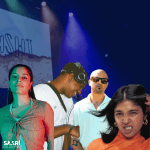
Creativity is the unifying thread for our culture and vehicle to express our shared journeys to get to this day. Modern-day creative works that marry Indian and Pakistani creativity including Ms Marvel, Churails, Child of Empire, Swet Shop Boys, much of the UK Asian Underground music scene are at the cusp of a new wave of storytelling. So the natural question arises: why don’t we see more Indian and Pakistanis creating together?

We draw on our nationalistic narratives for creativity and give air to stories that were suffocating under the weight of colonial trauma. As Indians and Pakistanis, we share so much more than a border and an equal love of cricket and Roohafza. Our history gives us a unique opportunity to draw inspiration from beyond just our own narratives, to draw on something bigger but still recognise our uniqueness.
We see Indian art, we see Pakistani art and yet despite such a deep understanding of one another, we have limited collaboration. With more South Asian creatives being given opportunities and recognised for their contributions, the future of India and Pakistan together is about creativity, and the heart of that is empathy.
Perhaps 75 years of Independence is a reckoning with our history. The path less trodden is the path right for creativity, the path towards empathy where we can not only tell each other stories but celebrate each other's stories; the shared experiences, and the nuances. In a day where we are expected to be either Indian or Pakistani, we are much more than that, and in the diaspora context, we can make what it means to be South Asian our own.
The SAARI Collective Team