What is the cost of progress?
Are we destined to be forever dissatisfied and desperate for more?
These questions are at the very centre of playwright S. Shakthidharan’s latest piece, The Wrong Gods.
S. Shakthidharan, who goes by Shakthi, is the seven-time Helpmann Award winning playwright best known for the critically acclaimed Counting and Cracking, a three-hour intergenerational epic featuring 16 performers and a tremendous set which debuted in 2019 in Sydney and last year played Off-Broadway at New York’s Public Theatre.
Counting and Cracking recently won 7 Green Room Awards for theatre, making it the most awarded South Asian play in Australian history.
The Wrong Gods with a cast of four, 90 minutes run-time and an intimate set at Sydney’s Belvoir St Theatre, is pared back in comparison, but equally vast in the ideas it tackles.
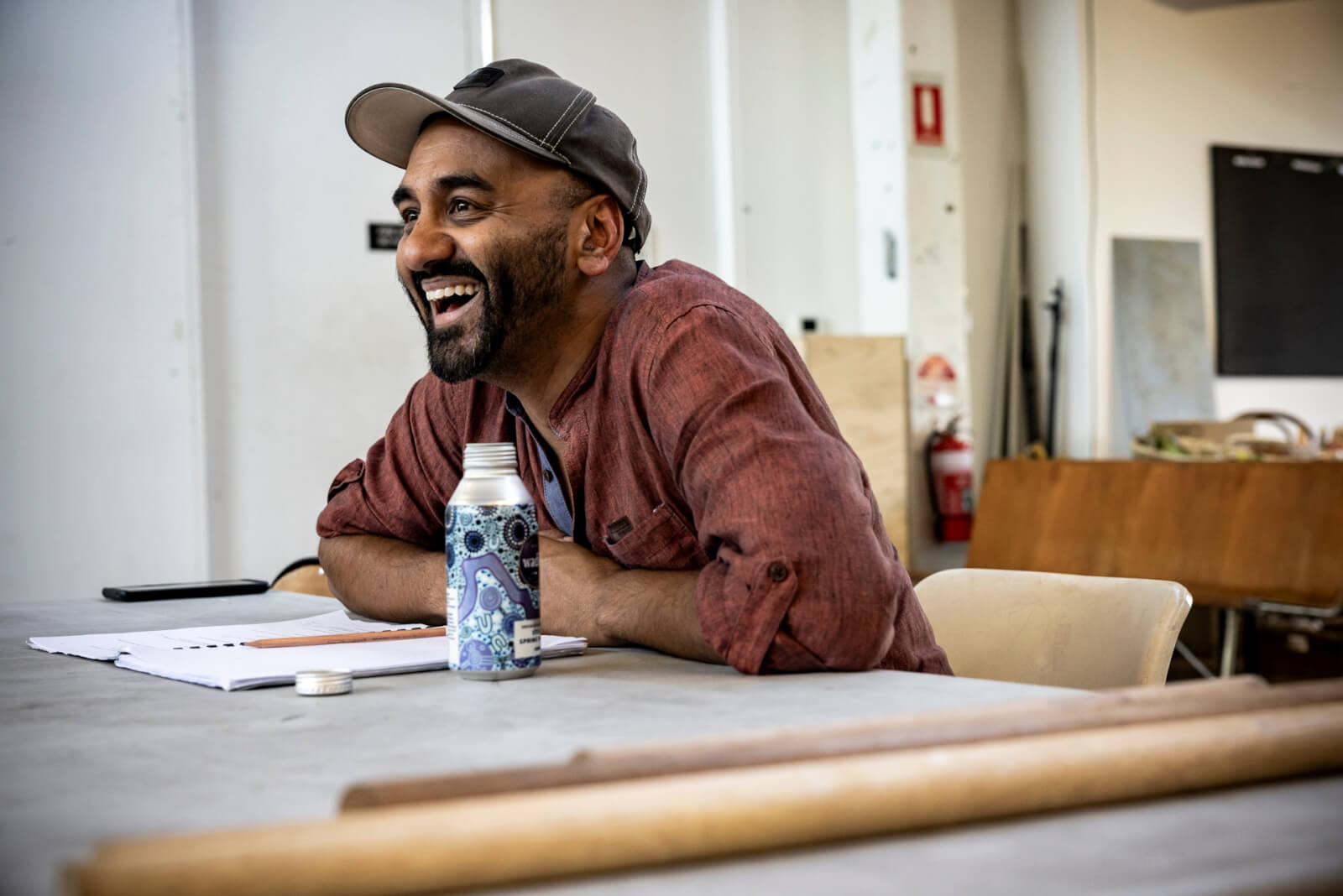
Co-directed by Shakthi and Hannah Goodwin, this play is set in rural India, where Nirmila (Nadie Kammallaweera) toils the land her ancestors have lived on for over 50,000 years and prays to her gods, who live and breathe in the rivers, parakeets and kingfishers around her. Meanwhile, her daughter Isha (Radhika Mudaliyar) dreams of an escape from her predictable life. Inspired by her teacher Miss Devi (Manali Datar), Isha wishes to experience life outside the valley and become a scientist.
Nirmila, recently abandoned by her husband, needs her daughter to support her on the farm, but Isha’s desires a different life entirely. The more Nirmila pushes Isha towards her way of life, the more Isha pulls away.
So when Laxmi (Vaishnavi Suryaprakesh) arrives from the big city, offering a scholarship for Isha to study and new farming technology to help Nirmila scale and profit from her farm, it’s a temptation that’s hard to resist. The old gods had never offered something like this before.
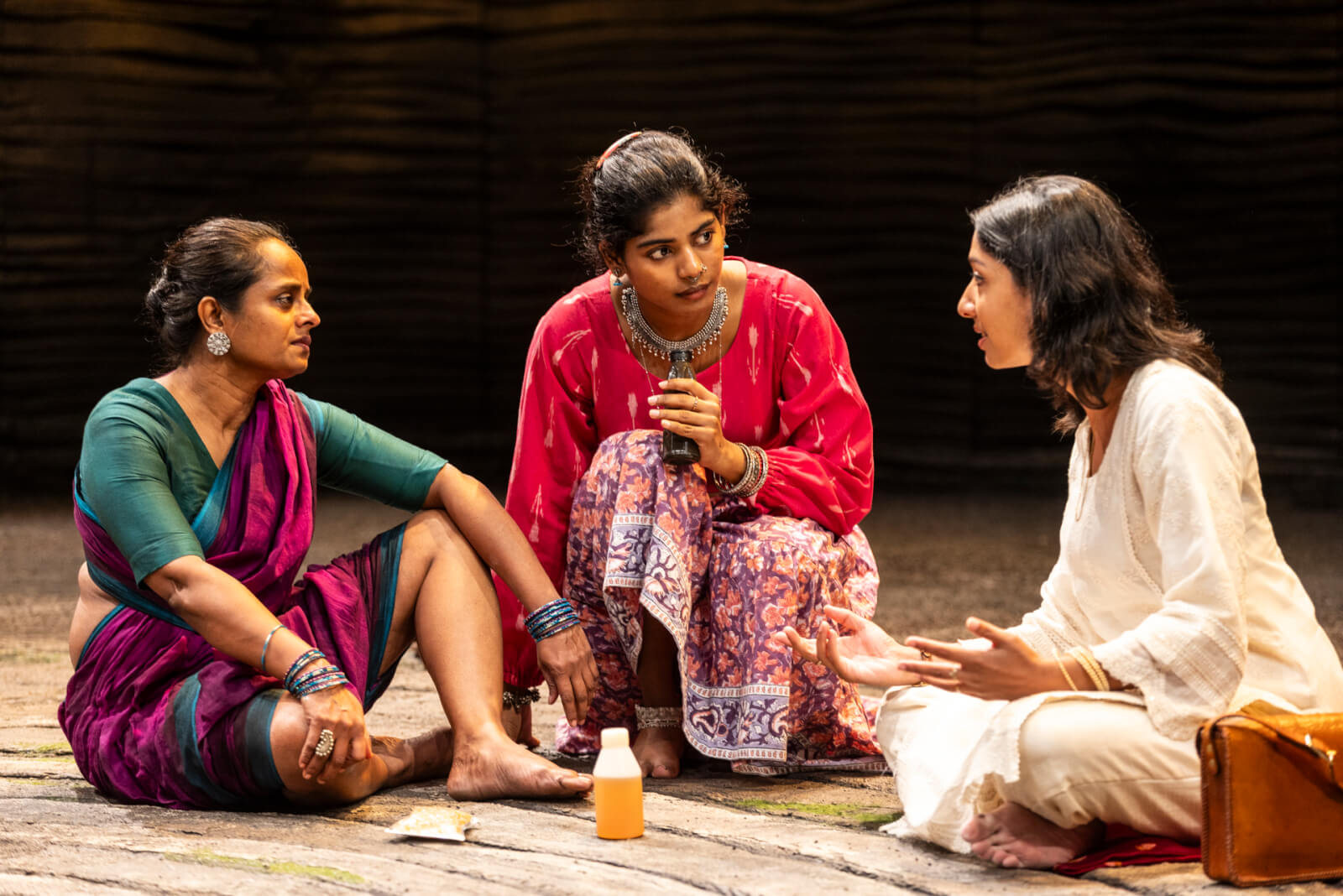
Nirmila is openly skeptical of these “new gods” from the big city but Isha embraces them with open arms. Where Nirmila is cautious, untrusting of the capitalistic ‘demons’, Isha worships them – and herein lies the struggle at the centre of this play.
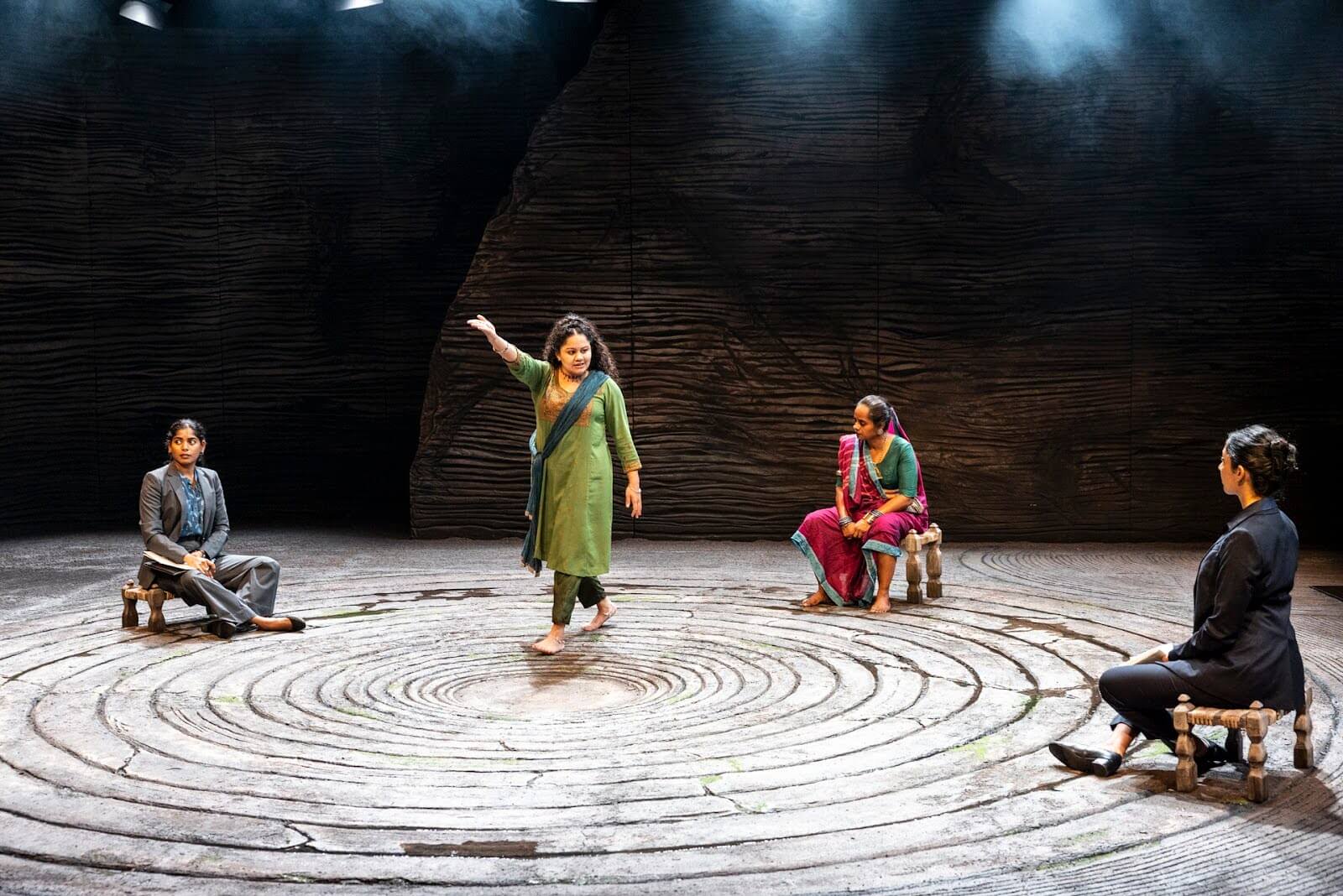
Set and costume designer Kreethi Subramanyam’s simple setup of tree rings with moss growing at the centre is symbolic of the decades of stories and cycles of life that Nirmila’s village has borne witness to. With minimal but impactful set dressing, consisting of logs as seats and farming tools, the circular stage is an apt setting for Isha, Nirmila, Laxmi, and Devi’s views to collide. Subramanyam’s costume designing is equally effective, reflecting not only traditional and modern ideals, but also caste and femininity in different forms.
Although the narrative and dialogue is strong throughout the play, there are moments where the dialogue appears didactic and the strength of the script slips. The acting is grounded and deeply convincing, but given the show is in its first week some performances are still being ironed out.
Shakthi has added layers to what could have been a black-and-white, good-vs-evil story. His characters are complex, you find yourself identifying with them all at some point or another. Over the 90-minute run time, Shakthi’s script takes us into the trenches of a war between mother and daughter, progress and tradition, nature and consumption, the right gods and the wrong ones.
As much as a commentary on capitalism, The Wrong Gods is also a local tale. On opening night a baggy-eyed but bubbly Shakthi who’d collected seven Green Room Awards in Melbourne just days ago tells me about the inspirations for his play.
“About ten years ago I spent time living in the Narmada Valley with a couple of Australian artists, while they were in the midst of the protest, the Namrada Bachao Andolan (Save Narmada Valley Movement),” he said referring to the social movement in India led by farmers and indigenous people against many large dam projects.
“I’ve always been struck by the fierceness of the women in that valley. They’d spent tens of thousands of years living life in their own way, and they’d come to realise in the most horrible of circumstances that the way other people in the world live their life is going to change the way they live their life in the valley forever.”
In the process of writing this play, Shakthi was reminded of a woman he’d met in his time in the Namrada Valley. “I kept remembering this woman in the valley who was open to our way of thinking because she had been forced to and I started to wonder what it would take for people in the city to be open to their gods and their way of thinking and how our gods can meet.”
Walking away one is left questioning the very idea of progress. What is the cost of this ideology we’ve bought into, where we believe we can have it all? Is worshiping freedom, consumption and infinite knowledge really superior to worshipping the river, the parakeets and the kingfishers?
Gripping and emotional, The Wrong Gods is a must-see play urging us to slow down, listen, reconnect with our past and our natural surroundings. This show is not to be missed.
The Wrong Gods is playing at Belvoir Theatre in Sydney till 31st May, with a community promotion night with discounted tickets on Friday 16 May.
It is coming to the Melbourne Theatre Company and playing at the Arts Centre in Melbourne from 6th June to 12th July.
Harshdeep Kaur is a freelance writer, former Editorial Team Leader at SAARI Collective, and the current Growth Lead at business and politics news outlet Capital Brief.